Navigating the Sevastopol Station: The Art of the No Map Challenge in Alien Isolation
When I first booted up Alien: Isolation, I thought I understood survival horror. I had played through the Resident Evil series, crawled through the dark corridors of Dead Space, and survived the nightmares of Silent Hill. But nothing prepared me for the sheer, unrelenting tension of being hunted by a single, intelligent predator. The game does not just throw monsters at you; it creates an ecosystem of fear where every sound, every shadow, and every flickering light matters. And then I decided to try something I had never attempted before: playing through the entire game on Nightmare difficulty with no HUD, no damage, and no map. That was the true no map challenge.
The no map challenge is not about being brave or showing off. It is about stripping away the crutches that modern games give us and forcing yourself to rely on pure environmental awareness. In Alien: Isolation, the map is your lifeline. It shows you where the Alien is patrolling, where the save points are, and how to navigate the labyrinthine corridors of Sevastopol Station. Without it, you are blind. You have to memorize the layout of each level, learn the patrol routes of the Xenomorph through trial and error, and make decisions based on sound cues alone. This changes the entire experience from a guided tour into a desperate fight for survival.
I remember my first attempt. I was playing on Nightmare difficulty, which means the Alien is more aggressive, resources are scarce, and death is almost certain. I had decided to record a cinematic playthrough in 4K resolution, with no commentary, to capture the raw atmosphere. The idea was to create a video guide that showed not just the gameplay, but the feeling of being Amanda Ripley, alone on a derelict space station with a perfect killer stalking you. But I quickly realized that without the map, I was lost. I wandered into dead ends, triggered alarms, and got caught by the Xenomorph more times than I care to admit. It was humbling.
Why the No Map Challenge Transforms the Experience
The core of Alien: Isolation is stealth gameplay. You are not a soldier; you are a survivor. You hide in lockers, under desks, and behind crates. You distract the Alien with noisemakers and hope it does not check the vent you are crawling through. The no map challenge forces you to engage with these systems on a deeper level. Without a map, you cannot plan a route; you have to react to the environment in real time. Every corner becomes a potential trap, every open door a risk. This is where the game shines brightest.
One of the most striking aspects of the no map challenge is how it changes your relationship with tension. In a normal playthrough, you might glance at the map, see the Alien is two rooms away, and relax a little. Without the map, you never know. That uncertainty keeps the fear management system constantly active. You are always listening for the hiss of the vents, the thud of the Alien dropping from the ceiling, the distant scream of another survivor. The game becomes a symphony of fear, and you are the conductor, trying to keep the orchestra from overwhelming you.
I found that the no map challenge also forced me to pay attention to the atmospheric world in ways I had not before. Sevastopol is a beautifully designed station, full of detail and history. Without a map, I had to rely on visual landmarks: a blood splatter here, a broken terminal there, the flickering sign for the transit station. I started to notice the little stories told through the environment, like the crew member who tried to barricade themselves in a room only to be dragged into the vents. That level of immersion is hard to achieve when you are staring at a map on your wrist.
Practical Tips for Surviving Without a Map
If you are thinking about trying a no map challenge yourself, there are a few things I learned that might help. First, memorize the critical paths. The game is not random; the layout of each section is fixed. Spend your first few deaths just exploring, taking mental notes of where things are. The medical bay is always near the transit hub; the control room is always at the top of a long staircase. These patterns become second nature after a while.
- Use sound as your radar. The Alien makes distinct sounds for each of its behaviors. The hiss when it enters a vent, the heavy footsteps when it patrols, the screech when it spots you. Learn these sounds and you can navigate without ever seeing the creature.
- Master the motion tracker. Even without the full map, the motion tracker is still visible and shows nearby threats. Use it sparingly; it also makes noise and can attract the Alien.
- Plan your save points. Since you are doing a no save challenge, you cannot rely on quicksaves. Know where the manual save stations are and plan your route to hit them at safe moments.
- Embrace trial and error. You will die. A lot. Each death teaches you something about the level layout or the Alien's behavior. Treat every death as a lesson.
- Stay calm. Fear management is as much about your own panic as the character's. If you start shaking, pause, take a breath, and remind yourself that the Alien is just code.
The No Map Challenge as the Ultimate Test of Survival Horror
There is a reason why the no map challenge has become a talking point among the Alien: Isolation community. It represents the purest form of the survival horror genre. You are stripped of all advantages, forced to rely on your wits, your memory, and your ability to handle pressure. It is the difference between watching a horror movie and being inside one. When IGN reviewed the game back in 2014, they praised its tension and atmosphere, but even they could not have predicted that players would create their own hardcore modes just to feel more afraid.
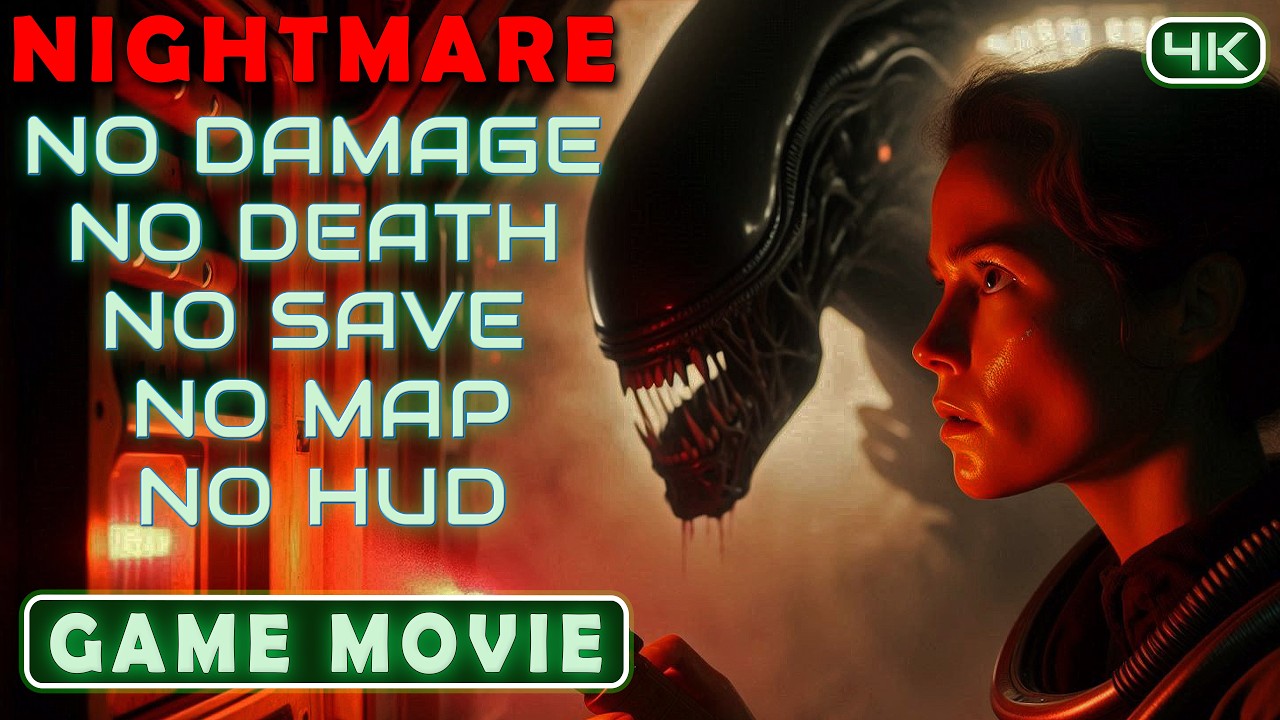
For anyone looking to push themselves further, combining the no map challenge with a no damage run and a no save challenge creates an almost impossible gauntlet. One mistake and you restart the entire game. That is not for everyone, and that is fine. The beauty of the no map challenge is that you can tailor it to your own skill level. Maybe you keep the map but disable the HUD. Maybe you play on a lower difficulty. The goal is not to prove anything to anyone else; it is to experience the game in a way that feels new and terrifying again.
I have seen players on forums like Respawn and Reddit share their own no map challenge stories. Some succeed, some give up halfway, and some find creative ways to circumvent the difficulty, like drawing their own maps on paper. That last approach is interesting because it shows that the challenge is not about being a purist; it is about engaging with the game on a deeper level. Even taking notes or sketching a map forces you to pay attention to details you would otherwise ignore.
The Role of a No-Commentary Walkthrough
Recording a no-commentary walkthrough of the no map challenge adds another layer of authenticity. Without commentary, the viewer experiences the same silence and tension that you felt. They hear the creak of the floorboards, the distant scream of the Xenomorph, the frantic beeping of the motion tracker. It is the closest thing to a shared survival horror experience. When I recorded my own cinematic playthrough in 4K resolution, I wanted the viewer to feel like they were there, hiding in the dark, not knowing what was around the corner.
The no map challenge is not for everyone. It is frustrating, punishing, and sometimes feels unfair. But for those who stick with it, it offers a level of gameplay immersion that few other games can match. It transforms a great survival horror game into a masterpiece of tension. If you have ever wondered what it feels like to be Amanda Ripley, hunted through the corridors of Sevastopol by a relentless Xenomorph, try the no map challenge. Just be prepared to die a lot.
In the end, the no map challenge is a testament to the design of Alien: Isolation. The game holds up even when you remove one of its most essential tools. That is the mark of a truly great survival horror experience. It does not rely on gimmicks or cheap scares. It relies on atmosphere, sound design, and intelligent enemy AI. And when you take away the map, you realize just how well those elements work together to create one of the most terrifying games ever made.